
If you’re new to forex trading, one of the first things you’ll notice is that currencies are always quoted in pairs like EUR/USD, GBP/JPY, or USD/TRY. That’s because forex trading is essentially the act of buying one currency while selling another. But not all currency pairs are created equal. Understanding currency pairs is crucial, as they’re generally divided into majors, minors, and exotics each with unique characteristics that impact volatility, liquidity, and risk.
Let’s break them down so you can better understand which type of pair fits your trading style.
What Are Major Currency Pairs?
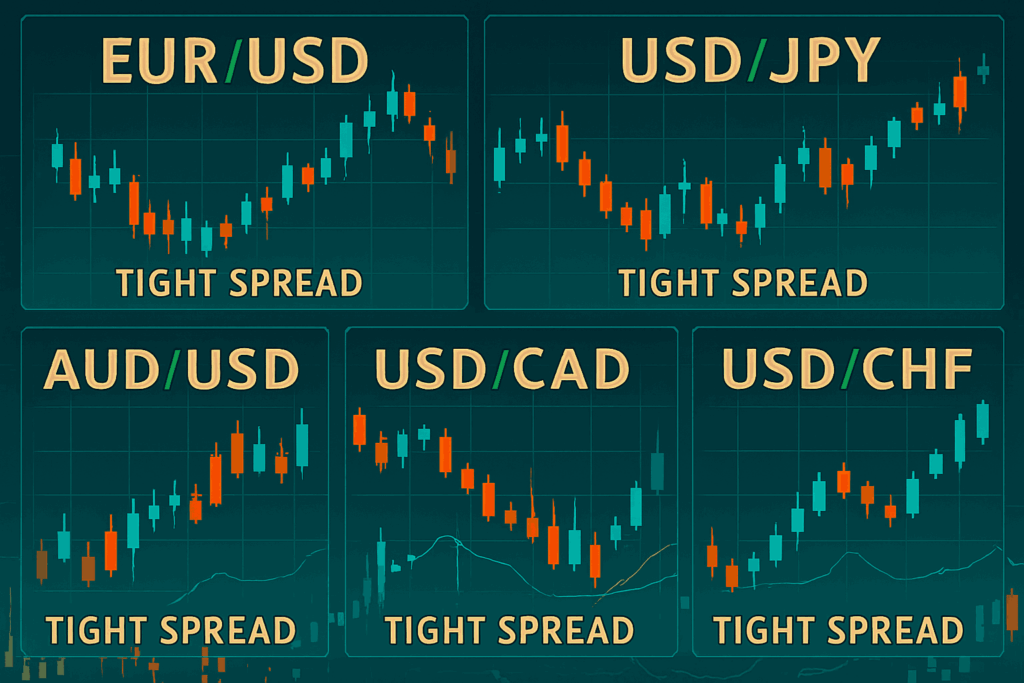
Major pairs are the most traded in the world, always involving the U.S. dollar (USD). These pairs account for the bulk of daily forex transactions, making them highly liquid and relatively stable compared to others.
Examples of major pairs include:
- EUR/USD – Euro vs U.S. Dollar
- GBP/USD – British Pound vs U.S. Dollar
- USD/JPY – U.S. Dollar vs Japanese Yen
- USD/CHF – U.S. Dollar vs Swiss Franc
- AUD/USD – Australian Dollar vs U.S. Dollar
- USD/CAD – U.S. Dollar vs Canadian Dollar
- NZD/USD – New Zealand Dollar vs U.S. Dollar
Key traits of majors:
- High liquidity → Tighter spreads and smoother price action.
- Lower volatility → Less wild swings compared to exotic pairs.
- Easier access to news and analysis → Most analysts cover them extensively.
For beginners, majors are often the best place to start because their behavior is more predictable, and trading costs are lower.
What Are Minor Currency Pairs?
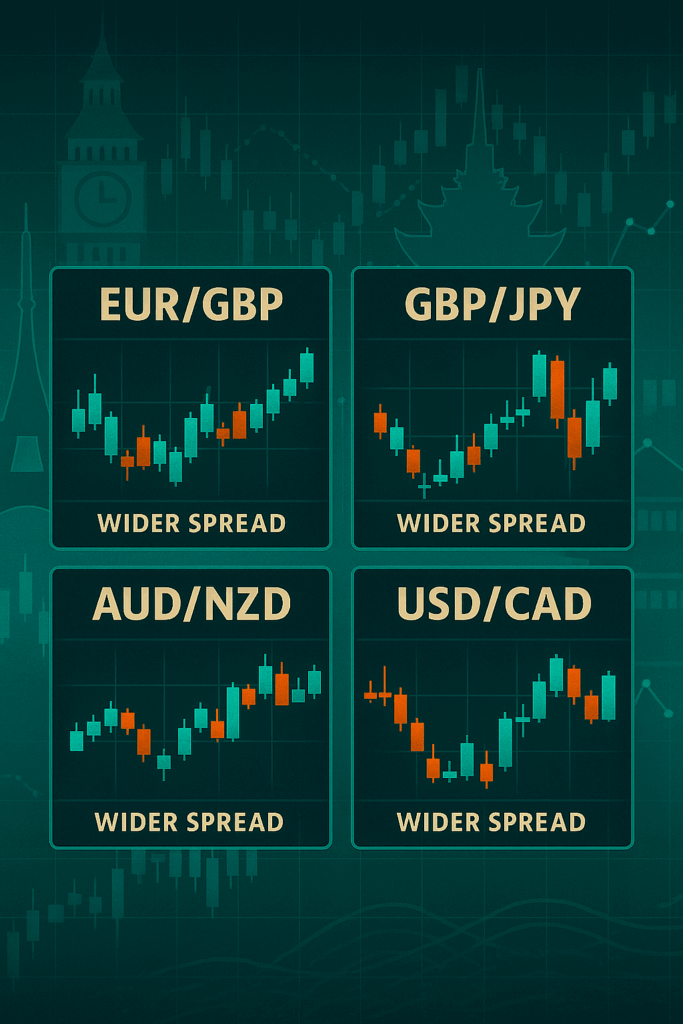
Minor pairs (sometimes called “crosses”) don’t include the U.S. dollar but still involve major global currencies. Common crosses are formed with the euro, British pound, or Japanese yen.
Examples of minor pairs include:
- EUR/GBP – Euro vs British Pound
- EUR/JPY – Euro vs Japanese Yen
- GBP/JPY – British Pound vs Japanese Yen
- AUD/NZD – Australian Dollar vs New Zealand Dollar
Key traits of minors:
- Moderate liquidity → Not as high as majors, but still reasonable.
- Wider spreads → Trading costs may be slightly higher.
- Good diversification → Allow traders to express views without using USD.
Minors are useful if you want to trade relationships between economies outside of the U.S., such as European or Asia-Pacific markets.
What Are Exotic Currency Pairs?
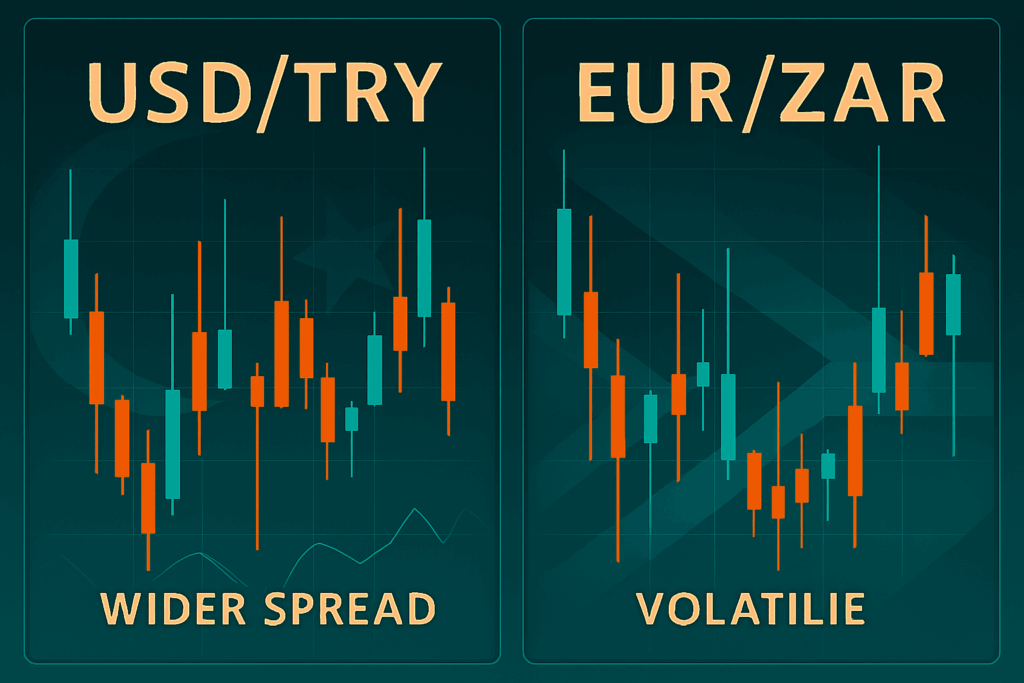
Exotic pairs involve one major currency (often USD, EUR, or GBP) and one currency from an emerging or smaller economy.
Examples of exotic pairs include:
- USD/TRY – U.S. Dollar vs Turkish Lira
- USD/SEK – U.S. Dollar vs Swedish Krona
- USD/SGD – U.S. Dollar vs Singapore Dollar
- EUR/ZAR – Euro vs South African Rand
Key traits of exotics:
- Low liquidity → Harder to enter and exit positions quickly.
- High volatility → Sudden sharp moves due to politics, economic shocks, or low market participation.
- Higher trading costs → Wider spreads make them less beginner-friendly.
Exotics can deliver big profits but also carry higher risks. They’re typically better suited for experienced traders.
Which Currency Pairs Should Beginners Trade?

For those starting out, majors are the most practical choice. Their liquidity ensures tighter spreads, meaning you keep more of your profit. Minors can be a good next step once you’re comfortable, offering diversification and interesting trading opportunities.
Exotics should be approached with caution. While tempting for their large swings, they require strong risk management and a deep understanding of the underlying economies.
Final Thoughts
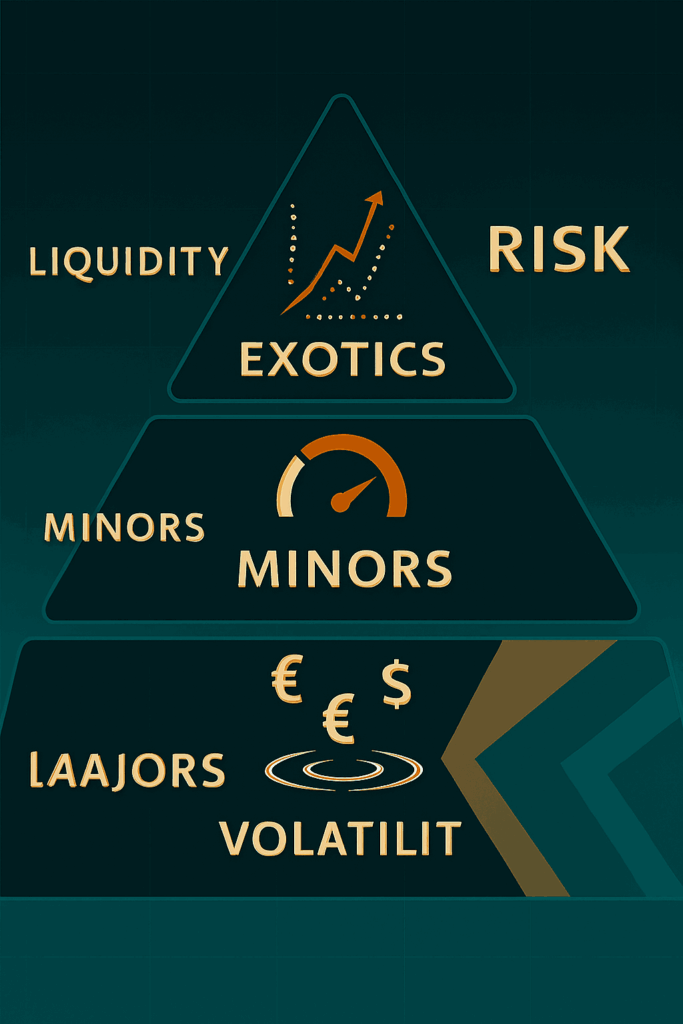
Understanding majors, minors, and exotics is a fundamental step for any forex trader. Each category offers different opportunities and risks:
- Majors → Best for beginners, with high liquidity and lower costs.
- Minors → Great for diversifying and trading non-USD economies.
- Exotics → Risky but potentially rewarding for experienced traders.
By knowing the differences, you’ll be able to choose the right pairs that align with your trading goals, risk tolerance, and level of experience.
Start simple, master the majors, and only then expand into more complex pairs. With time and practice, you’ll develop a better sense of which pairs fit your strategy.