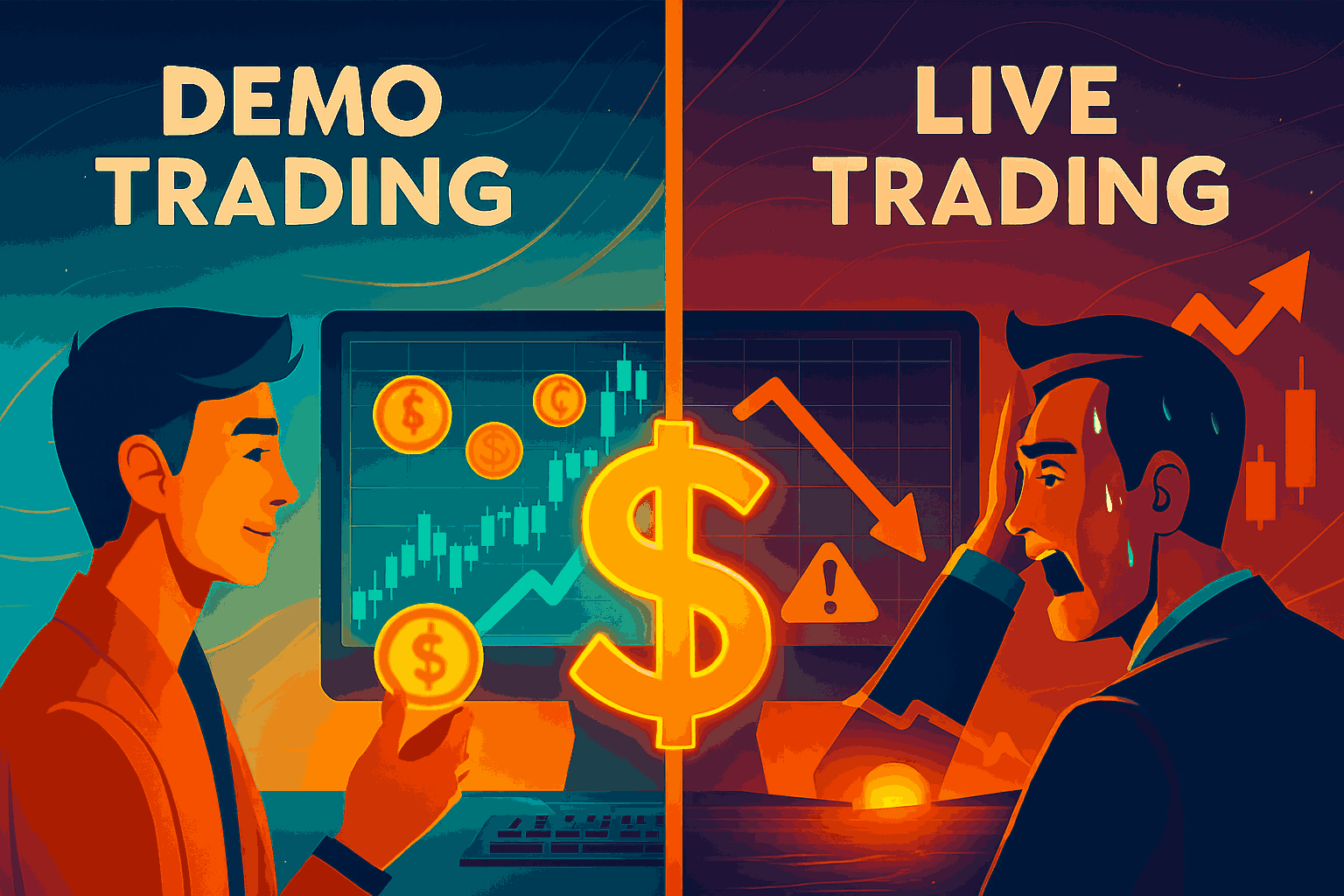
For every aspiring forex trader, one of the first questions is about Demo Accounts vs Live Trading: Should I start with a demo account or jump straight into live trading? Both options come with advantages and drawbacks, and the right choice often depends on your experience level, goals, and risk tolerance. Understanding the differences in Demo Accounts vs Live Trading can help you avoid costly mistakes and build a solid foundation for long-term success.
What Is a Demo Account?
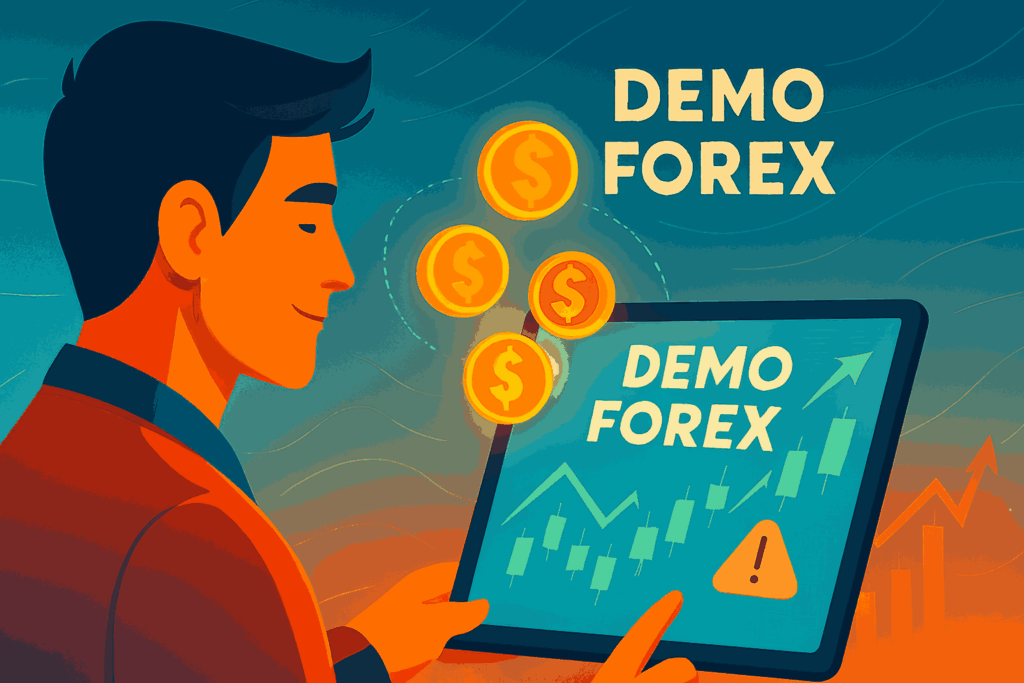
A demo account allows you to trade with virtual money on a real trading platform. You experience live price movements and can place trades exactly as you would in a live account but without risking actual capital.
Benefits of demo accounts include:
- Risk-free practice – You can learn how the platform works, test strategies, and explore trading tools without financial consequences.
- Building confidence – For beginners, it’s a safe environment to understand order types, stop-loss placement, and chart analysis.
- Strategy testing – Traders can trial different approaches, from scalping to swing trading, and analyze performance before going live.
Limitations of demo accounts:
- No emotional pressure – With virtual funds, you don’t feel the same fear or greed that real money creates.
- Unrealistic execution – Spreads and slippage may be tighter than in live conditions, giving a false sense of performance.
- Overconfidence risk – Success in demo trading can trick beginners into thinking they’re ready for live markets before truly being prepared.
What Is Live Trading?
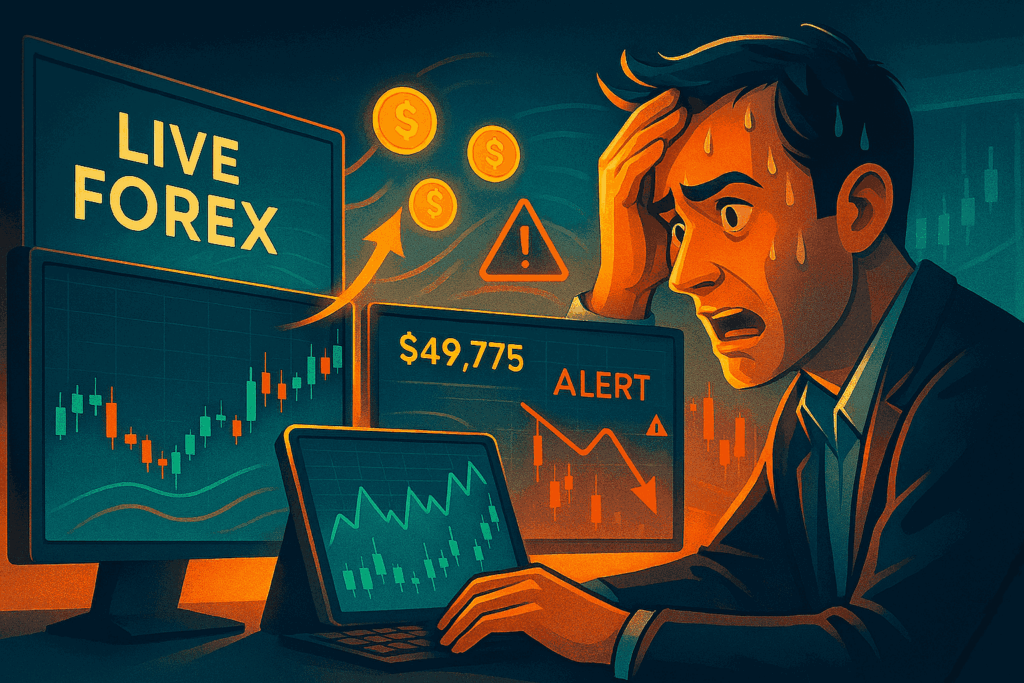
Live trading involves using real money in actual market conditions. Here, the psychological and financial stakes become real.
Benefits of live trading include:
- Exposure to real emotions – You experience how fear, greed, and hesitation impact decisions.
- True market conditions – Execution speed, spreads, and slippage reflect reality.
- Discipline building – Managing your own capital forces you to follow risk management rules.
Challenges of live trading:
- Financial risk – Losses are real, and mistakes cost money.
- Emotional stress – Many beginners struggle with pressure and impulsive decisions.
- Risk of over-leverage – Without proper discipline, traders can blow up accounts quickly.
Where Should Beginners Start?
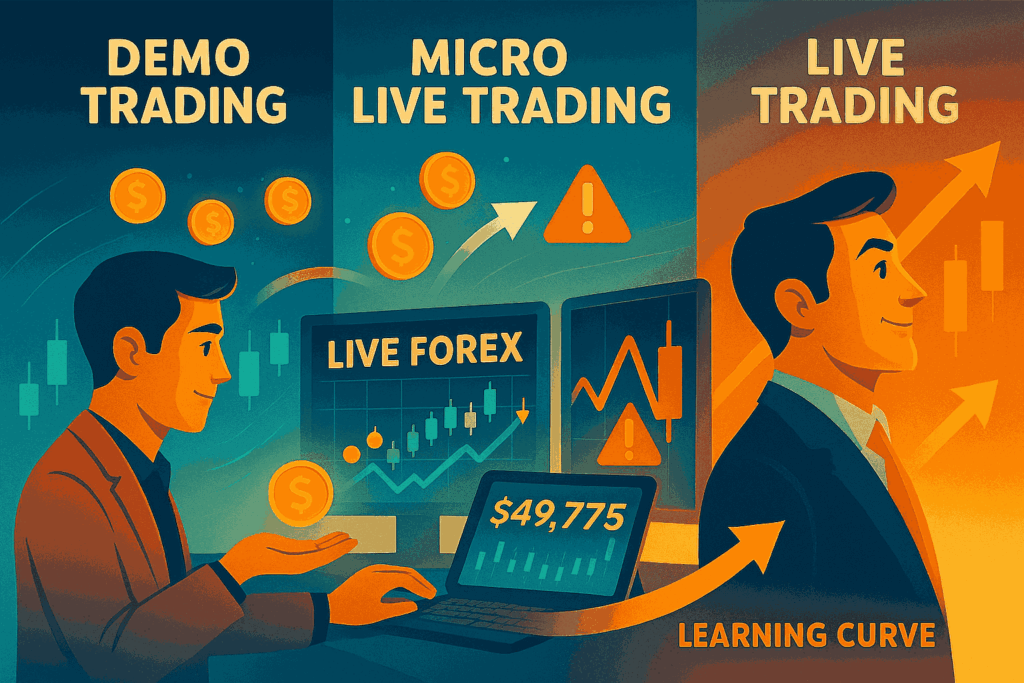
Most experts recommend starting with a demo account. It’s the safest way to build technical skills and understand the mechanics of trading platforms. However, staying in demo mode too long can create a comfort zone that doesn’t prepare you for the emotional challenges of trading real money.
A practical path for beginners might look like this:
- Start with demo trading → Spend at least 1–3 months practicing. Focus on learning charting tools, technical indicators, and order placement.
- Set clear performance goals → Aim for consistent results in your demo account. This builds confidence before going live.
- Transition to micro live trading → Start with a small account size (e.g., $100–$500) and use micro lots. This way, you feel real emotions while limiting risk.
- Review and adjust → Treat your early live trades as an extension of learning. Track mistakes, refine risk management, and gradually increase trade sizes only after consistent results.
Common Mistakes Beginners Make
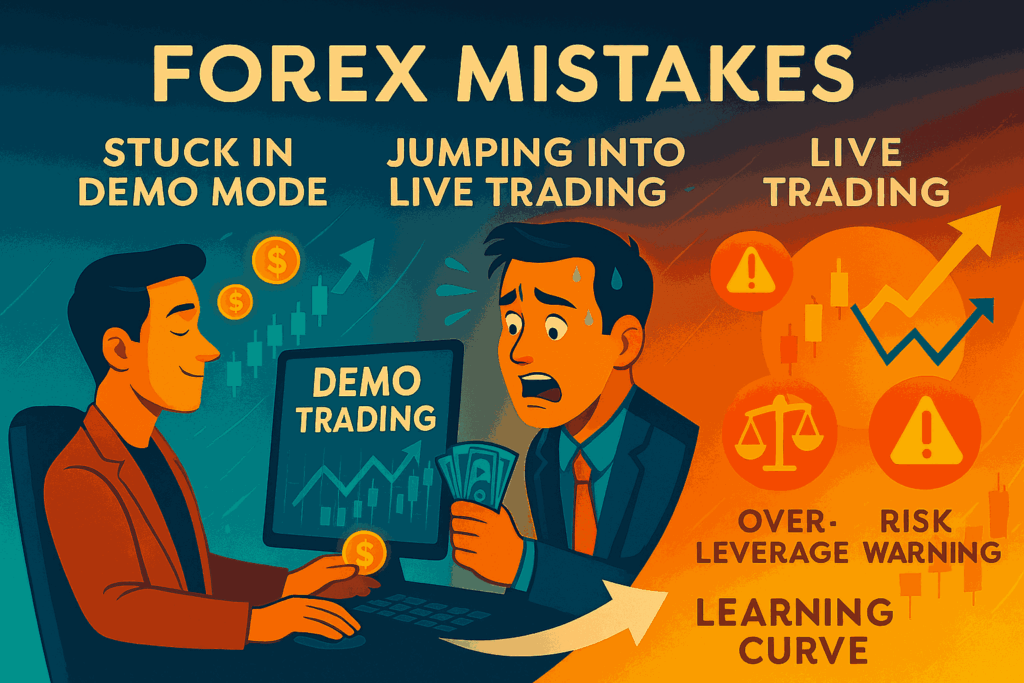
- Staying too long in demo mode → Avoid using it as a permanent comfort zone.
- Jumping into live trading too soon → Without mastering basics, losses can pile up quickly.
- Not treating demo seriously → Just because it’s virtual doesn’t mean it should be careless. Practice like it’s real.
- Risking too much in live trading → Beginners often over-leverage because they underestimate volatility.
Final Thoughts
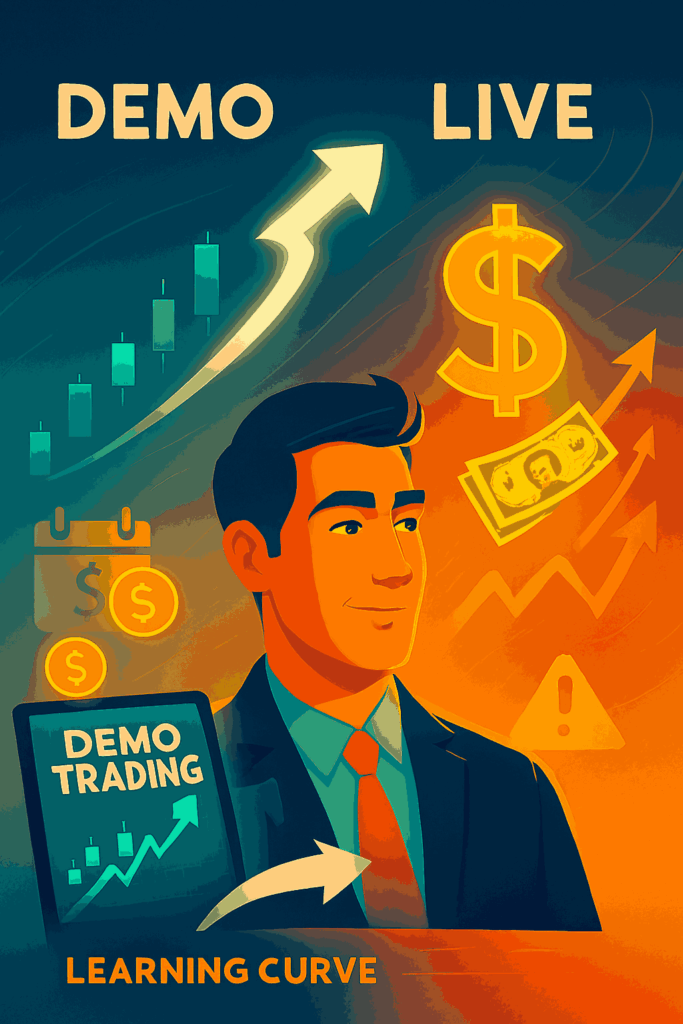
The debate between demo accounts and live trading isn’t about choosing one over the other, it’s about using them in the right sequence. Demo accounts are essential for skill-building, but only live trading can teach you discipline and emotional control.
The best approach is to start in demo mode, gain confidence, and then move to live trading with small amounts. By treating each stage as a learning process, you’ll minimize risks and gradually develop into a disciplined, well-prepared trader.